Episode #66 Acupuncture for All: Making Whole-Person Health Accessible with Eana Meng
Is the future of healthcare best shaped by rethinking its past? Eana Meng, an MD PhD candidate at Harvard Medical School, and the founder of the nonprofit Small Steps for Health, is bringing integrative therapies, including acupuncture, acupressure, Reiki, and sound healing, to underserved communities across Boston.
Eana joins Dr. Victoria Maizes and Dr. Andrew Weil for a conversation about her personal health journey, her family’s legacy of Chinese medicine, and the experiences that inspired her to reimagine how people access care.
Together, they explore the importance of integrating traditional healing practices with conventional medicine, and how small steps can lead to meaningful change. Eana shares how community-based care can reduce barriers, build trust, and bring moments of relief to people who have often felt excluded from the healthcare system.
Listen in for an inspiring look at the intersection of history, healing, and the future of integrative primary care and one way to make whole-person health accessible to more people.
Please note, the show will not advise, diagnose, or treat medical conditions. Always seek the advice of your physician or healthcare provider for questions regarding your health.
Play Episode





Transcription:
Victoria Maizes MD (00:03.096)
Ina Meng is an MD PhD candidate at Harvard Medical School and the Department of the History of Science.
She has been focused on tracing histories of American primary care, especially in resource-limited settings where communities developed innovative models of whole-person care, such as the Harriet Tubman Medical Office in Oakland, Alaska's Community Health Aid Program, and the emergence of whole health within the VA. In 2022, ENA founded a student-led initiative that partners with communities.
To provide free integrative care and her nonprofit Small Steps for Health has reached more than 2,000 individuals across Boston. Welcome, Ina.
Eana (00:53.122)
Thank you so much for having me, Victoria Andy. It's an honor to be here.
Victoria Maizes MD (00:57.776)
Well, we're delighted to have you. And I I'd love to begin with your belief that history and healing are inseparable. tell us how you formed that belief.
Eana (01:10.306)
Yeah, well, thanks so much for asking about that. That's like my main, I think, mission and ethos in life is to really illuminate how we in the present are always connected to our past and especially around histories of healing. and so my sort of the thing that I really want to show is that there's a direct lineage from past histories to present healing. and that really came from my own sort of journey in learning more about integrative health. I grew up in Boston, which is an
Epicenter of Western Medicine. And I really started learning more about sort of different kinds of medicines because of my own background. My grandmother was a Chinese medicine practitioner back in Shanghai. But she actually passed away when I was five, so I never got to know her super well. But she was sort of kept alive by my mother through stories about her and stories of healing. And so my sort of relationship with learning about healing was always sort of through memory and through history.
About my grandmother. And then as I, you know, got older, went through and been really tied with the healthcare system in Boston for a long time, first actually as a patient. I was misdiagnosed with an appendicitis when I was 12. It was a clinical diagnosis. The doctors were really, really sure that it was appendicitis. I went under the knife and they came out of the operating room and apologized profusely to my parents, saying that you actually, you know, your daughter didn't have appendicitis, but we did go ahead and remove the appendix, anyways.
Because back then the research was saying that it was this vestigial organ, didn't have too much utility to it. Since then, you know, research has kind of shown that it is an important organ for sort of immune system regulation. And my own sort of health journey has kind of mapped on to some, you know, I'm currently managing some autoimmune conditions. So that was one of the early moments in my life that I realized that Western medicine may not have the answer to everything. It has answers to a lot of things, but not everything. And so I wanted to have.
have a way to explore what were alternative ways of thinking.
Eana (03:14.497)
practices around health and it was really in the space of history that I got to do that. And so when I was went to college, I decided alongside my pre-med courses, which I did love. I did love learning about organic chemistry, I love learning biochem, I also wanted to understand what medicine looked like in the real world. And so I studied history of medicine in undergrad and just discovered these amazing histories of healing all across the country, the world. And in that process it made me realize that
As we learn about histories of healing, I think there's a great potential for those histories to heal us in the present. When we learn about how people have sort of surmounted impossible circumstances to bring healing to their communities, it gives us that sense of vitality and strength to continue in our present moment. And so that's become my mission is to say, hey, let's look back in the past of how other people sort of surmounted these huge odds and continued.
Andrew Weil (04:10.954)
Can you can you give us an example of a history of healing that that was meaningful to you?
Eana (04:15.529)
Yeah, absolutely. my the main
Project that I've been working on in last seven years has been with this incredible mentor of mine. His name is Dr. Tolbert Small. He was the physician for the Black Panther Party, sort of a very active group in the civil rights movement, founded in 1966. And he joined, or he actually never joined the party, but he became their physician out in Oakland, California, in 1970. And from 1970 to 1974, he was sort of the main physician. And you could just imagine the circumstances of the
The life and the community there, very resource limited, a lot of sort of not a lot of access to healthcare. And he was someone who really wanted to explore and be very creative about what options existed. And so he actually went to China in 1972 with the Panthers. They had this delegation to China right after President Richard Nixon went, actually just days after. On that trip, he learned about acupuncture. And he was he learned about it through the barefoot doctors movement.
Back then, and became so interested in it that when he came home, he, you know, he had bought a book from China, found some more books on acupuncture, what little there was, and worked with some people to translate it and taught himself how to do acupuncture, actually. and was trying it on himself, and then eventually started
you know, after months of practice, months of trying to say, or trying to see if this would work for him, started working with patients. And he has since served, you know, over thousands and thousands of patients in Oakland since 1972 with this mix of Western medicine and acupuncture. And he's the first, you know, African-American physician to practice acupuncture. he's introduced acupuncture to folks like Mayor Barbara Lee, to Angela Davis. and so it's his you know openness to learning more about different practices.
Andrew Weil (05:41.986)
I
Eana (06:11.317)
that allowed his community to heal in more ways than just taking medication.
Victoria Maizes MD (06:18.714)
Yeah, it's a really wonderful example. acupuncture is one of the things that you are providing in your nonprofit, which is called Small Steps for Health. My understanding is it's in honor of Dr. Small. and I'm curious, you you have a model where you deliver care through pop-ups. Why pop-ups?
Eana (06:34.157)
Yeah.
Eana (06:40.417)
Yes, pop ups because we want to meet people where they're at.
that's our main mission. You want to meet people where they're at both physically, right? So we work in apartment complexes, we work in parks, we work in hospital settings, we've worked in libraries, schools, and the idea is to lower barriers. And so not only is there the physical barrier when people can't always, you know, make it to a particular clinic or a treatment facility, we want to go meet them there. But it's also about meeting people where they're at sort of emotionally. when you you know go to people and say, hey, we're here.
Here, we're not forcing you to try this at all, right? There's no requirement. and we also offer, you know, we offer acupuncture, acupressure, Reiki, sound healing. The idea around that is kind of just differences in how close the practitioner gets, right? Because we want people to have a sense of I can choose to do the needles if I want to, but if I don't want to be touched, I can also just really enjoy the sound healing. so we want to meet people where they're at emotionally, mentally, and then also financially. So all of our pop-ups are.
Completely free for participants. And the idea around that is again to lower barriers of access. Because we really believe that it's actually the folks that have least access to these practices that stand to benefit the most in terms of getting the benefits of helping regulate their nervous systems, just have a moment of respite and relaxation in their days.
Andrew Weil (08:04.658)
One of the criticisms that we get is that integrative medicine, integrative health are only really for the affluent and that that people without means really can't access them. So what's your feeling about the future of that?
Eana (08:18.869)
Yeah, I mean I for me I'm happy with you know, whoever can get these treatments the better. I'm never gonna be, you know, upset with a particular group of people getting it. I'm super happy that, you know, people can afford it. And it's important to recognize that it is very hard to be an acupuncturist, it is very hard to be an introduced medicine practitioner, and you have overhead costs if you have a private practice, and so you do have to charge. And at the same time, what we're trying to build are sort of different options for people to make it possible to bring these practices to
Folks that can't afford it. So, actually, a lot of the practitioners we work with are folks that have their private practices, but have always been looking for opportunities to be able to make it more accessible. And what we do as an organization is essentially build that infrastructure where that's possible. And so we're a completely student led organization, and us as students, we do the work of finding the communities that may want to try these practices out. We will set up those pop ups and then we just send out a list of the
Practice or the pop ups to our practitioners, and they just sign up. And all they have to do is show up. We bring a lot of the materials, not the acupuncture needles, obviously, because we can't purchase those, but we bring you know the materials of setting things up the chairs, the massage tables, and all they have to do is show up. and then there's no requirement for any of the practitioners to do, you know, they can do one clinic a year, they can do one pop up every month. Some of our practitioners are there at every pop up. and so the idea.
Is trying to make it easy for more people to do this kind of work. And I think, like I said, it we really found that it's the people who have least access to these practices that benefit a lot. So, for example, we work we worked at this amazing shelter a couple of years ago that sadly has since closed down. But you know, we're working with folks that are experiencing homelessness. And we went in with our acupuncturists, our Reiki healers, and we had a couple folks after the pop-up come up to us and say,
That was the first time we ever felt like love from a healthcare provider. And as you can imagine, right, you know, his experience with the healthcare system has always been quite punitive. It's are you just trying to, you know, get pain meds? Are you doing your are you taking your methadone? Are you doing this? Are you doing that? There's a lot of stigma. Whereas our practitioners, our acupuncturists and Reiki healers, went in and asked, you know, where is your pain? How can we help you today? And that kind of experience of a 30-minute, a 15-minute session.
Eana (10:48.579)
was so powerful that he, you know, he left it saying, like, yeah, it's the first time I felt love and I felt another person said I felt like the devil was lifted off of me. And it was just so profoundly moving. And it for our practitioners too, it was such a gratifying experience. Because as you guys know, a lot of our practices that we do are not things that you have instant benefits from. That's kind of the ethos around a lot of things like Chinese medicine. It takes a little bit more time. But when you have, when you're working with someone
Whose sort of body state when you're working with them is already sort of high stress, high cortisol levels, dysregulated because you're sleeping on the streets. Even just 15 minutes or 30 minutes of intervention like Reiki or acupuncture can have profound effects. And so our practitioners actually really enjoy this work because they can see the benefits of it so quickly.
Andrew Weil (11:40.778)
How do you find practitioners who want to participate in this?
Victoria Maizes MD (11:41.286)
So
Eana (11:43.968)
Yeah, it's been you know when we first started basically I just sent out emails to every practitioner in the city that I knew and even folks I didn't just a lot of cold emailing sort of explaining to them our mission and then we had folks that responded and were really excited about it and then over time currently we have a network of more than 35 practitioners and we're continuing to build. One thing we also try to prioritize in these different opportunities is trying to prioritize practitioners.
Practitioners that come from the communities that we want to serve. That builds a lot of trust. We also want to invest economically into these practitioners. And that's also a big part of what we do is even though we don't have our participants pay, we do work very, very hard to try to have grants and philanthropy to provide financial support for our practitioners. Because we don't want to have this message where service work is seen as just volunteerism, because that's not sustainable in the long term.
And people are giving their time and energy to this, so we want to make sure they're compensated properly.
Victoria Maizes MD (12:49.638)
So Ina, it sounds like the people you serve, the community members love this, that the practitioners are feeling a lot of sense of service and value in what they're providing. I'm curious how your medical school classmates at Harvard regard this. And you know, you represent a new generation of physician. And Andy, were you at medical school at Harvard 60 years ago? it might have been a little different. So I'm I'd actually love to hear from both of you.
Eana (12:55.884)
Yeah.
Andrew Weil (13:15.434)
Yeah. A little different.
Victoria Maizes MD (13:19.612)
what the response is now and Andy to the extent that you had already developed these ideas, what it was like that.
Eana (13:26.367)
Yeah, I mean I think we benefit from people like you both, like Andy, that have laid the foundation for this to be in the vernacular of medicine. and when we are able to sort of continue that legacy that you guys have provided, it's so helpful because we're not doing something fully new. And that's part of the history too, right? Where I'm saying, Hey, look at this example you know, from sixty years ago when Andy was at medical school here or, you know, Dr. Schmal out in Oakland or the other work I'm doing, we are able to kind
We're not, there's this long lineage of people who believed in this. what's amazing is actually so many of my peers are really, really supportive. and I think the mo like I haven't actually gotten folks that are like, this is terrible what you're doing. I think people are really curious. And one of the things that I always say actually is just come experience it with me, right? Come to one of the pop-ups. So, one of the reasons why we are a student-led organization is I want to have this be part of this learning experience for the students early on.
Never, you know, I've gone through two years of medical school. I'll go back and do my rotations or finish up my rotations in a couple years. But in the curriculum phase, the didactic portion, you know, acupuncture shows up maybe for a tiny bullet point in chronic pain, right? and so that's very easy to just dismiss and be like, I don't know much about it. but then when I'm like, hey, come come to a pop up, see what this does for people, experience it yourself, right? When people try something, you know, experience it with these amazing healers.
Experience it in community when you're healing with other people, it's much harder to be like, this is just bogus or it doesn't work, because you see the effects that it's had that it has on other people. and so yeah, I have my med school peers come all the time. Most of our student staff are all college students, so pre health students as well. And so part of this is building in almost like a my my goal is to have this as a part of the pre-med pre-health curriculum in some ways. and so yeah, it's been it luckily it's been really
People have been willing to just be open. But yeah, Andy, I'd love to hear what your experience was like.
Andrew Weil (15:30.516)
Well, first of all, there were hardly any women in my class. I think twelve women out of a class of a hundred and fifty.
Victoria Maizes MD (15:33.914)
Ha ha ha.
Andrew Weil (15:38.269)
Acupuncture was thought of in the same way as putting knee pins into voodoo dolls, if it was thought of at all. And then while I was in medical school, James Reston, a very well known New York Times columnist, was in China, had an emergency ependectomy and reported on the front page of the New York Times that acupuncture relieved his pain. And so suddenly acupuncture was taken seriously for the first time, at least for pain relief.
Victoria Maizes MD (15:45.82)
Mm.
Andrew Weil (16:08.152)
Energy Reiki and other forms of energy healing, if people even knew about them, were considered black magic, completely beyond the pale. And you know, I think people in my class and faculty couldn't tell you the difference between an osteopath and a chiropractor. You know, there was a a level of ignorance about other forms of medicine and healing. So all that has changed greatly.
Victoria Maizes MD (16:33.66)
Yeah.
Yeah, we've come a long way. you you mentioned that you're offering acupuncture and acupressure and Reiki. What about other services at the pop-up clinics? how do you decide, you know, if somebody needs medication or somebody needs a supplement in an ongoing way or you know to have a manual medicine adjustment? How how are you thinking about services beyond the three you mentioned?
Eana (17:03.627)
Yeah, totally. So part of this has been a lot of just learning and growing organically. You know, we started with acupuncture,
Because that was what I was most familiar with. And then as we've grown, we've had a lot of like referrals from other people. For us, when we accept healers, what's a really important part of it in sort of the quote unquote vetting process is that there is a recommendation from someone that we already know and trust. because you know, trust is such an important part of this work. and so as we've expanded, you know, including Reiki, including sound healing, recently we, yeah, there's an amazing doctor who does sort of body manipulation.
We're really excited to bring him in as well. So it's growing organically, and it's also based on feedback from our community members, people saying, like, hey, like we'd love more massage therapists, you know, because we have one massage therapist. And so we're gonna try to expand that as well. And then in terms of the question of medication, it is so key to us that what we're trying to build here is not an alternative system of care, right? I think, as you guys well know, in this language around integrated medicine, conflict.
Complementary medicine, all the way back, it was alternative medicine. There's been this real effort to try to be much more integrative. And the language matters, right? Because it conceptual it helps us conceptualize what these practices how these practices can work together. We're not trying to set up an alternative system of care. I mean, that's what the Panthers did back in the 70s, and that was the context of the time. They needed to set up an alternative system of care where they were providing free health care when the state couldn't. But now we're in a context where I think there is more openness
These different practices, as Andy just mentioned. And it is really, really important for us to what we're trying to build is an integrative system and not like an alternative system, right? So we work actually very closely with the hospital, with community health workers, with people that are providing really good trained, they're trained in information around you know hypertension, diabetes, lifestyle management, but also about the medications, right? So for example, at one of our affordable housing units, we work very closely with mass.
Eana (19:10.699)
General Brigham with their community health workers. We're going to be co-locating our pop-ups. Where we're there doing our pop-up, our healing modalities, they're there with their community health workers, which are there to talk about these medications. And then there's also folks that can help set up sort of ability to connect with primary care. Because unfortunately, you know, a lot of people don't have primary care providers. And so it's really about offering this continuum of care and presenting this united front to communities.
rather than say we're just gonna do, you know, acupuncture, Reiki, or sound healing. you know, for us it's very important to be discerning about what our practices are good for and what it's not good for, right? We would never say acupuncture can cure cancer. It can help a lot with the cancer pain, right? But we're really, really clear about what things are good for and not good for. and that's just very important, I think, that kind of messaging right now.
Andrew Weil (20:06.994)
And in the trainings we offer at our center, an important component is lifestyle medicine. do you offer any lifestyle counseling or recommend lifestyle adjustments to people you deal with?
Eana (20:20.095)
Right now, not yet. We're hoping to build in that capacity.
That would be, you know, that's one of our goals is to get more providers that do that kind of work to work with us. But right now, because we don't do any as we do the pop ups, we're not doing any like health records. it really is just working with the patients and they tell us what, you know, issues they might have with in that moment. And we start building relationships with them over the years. And but our goal is to eventually connect them to a provider. And so one of the things we're working on with our website that we're
launching later this fall is building out a directory where we've had a lot of participants ask us like, who was that provider? Like, I'd love to become, you know, a patient of theirs. And so what we're building out is a directory where they can then go on this website, the directory, and see who lives close to them. And then they can actually develop a relationship, a proper, you know, therapeutic reliance and relationship with a provider who's able to do a sort of a very in-depth intake form and have that relationship
For us, we see the pop-up as the first small step, right, into their journey of their healthcare sort of healing journey, but it's not about providing substantial medical care in a pop-up setting, because that's not appropriate, right? It's we're we only have 15 minutes, 30 minutes. yeah, so our goal is to connect them to this broader directory.
Victoria Maizes MD (21:47.885)
Andy, some years ago now you and I brought a group of integrative medicine physicians to Cuba. And we went to Cuba because with the embargo they had almost no pharmaceuticals and they became incredibly creative about ways to offer primary care. They actually married a public health person and a physician. all of the providers lived in the neighborhoods, training was free.
Andrew Weil (21:55.424)
Mm-hmm.
Victoria Maizes MD (22:17.858)
But the expectation was then that you served in the neighborhood that you were from, so you knew your community. People made home health visits, but they integrated botanical medicines, they became very advanced in homeopathy, they used acupuncture, they used manual medicine. It was quite fascinating to see how out of, I would say, necessity, they built an integrative medicine climate of care.
It made me think of what you're doing when I was you know, preparing for this podcast interview. and and it's interesting to hear you say that in some ways you're offering something that is currently complementary with the goal of building something larger that does integrate into the care systems.
Eana (22:47.767)
That's you.
Eana (22:53.441)
Yeah.
Eana (23:06.153)
Absolutely. And your example is such a beautiful example of this
sort of theme that's emerging from the history research that I'm doing, which is oftentimes in actually resources resource limited places, you have some of the most innovative models of care. And you have models of care that are actually much more holistic than mainstream medicine. and part of that is because like you said, out of necessity, you kind of have to think about, what is the water source here, right? What's the nutrition here? Are people do people have access to heating, right? and those labels that we have that we
learn from an institutional side of what counts as public health, what counts as medicine, what's integrative health, what's this and that, all these different labels, is a very, it's, it's a it's a sort of perspective from the outside, right? Whereas if you're a patient, and this is something I think a lot about of what's the definition of primary care. There's a very clinical definition of primary care from the clinical world that we exist in. But oftentimes primary care to a the from the patient perspective is the first thing that they use, right?
Just think about the word primary, right? And so those categories of what counts specifically as part of what fields is a very sort of academic and institutional definition. And I think, like I've seen in my the history work that I do, and like you just mentioned, oftentimes in places where it's not so much about these outside labels, but it's more about what is necessary here, you have these much more holistic models. and I think that's something that we we should learn from as a system and understand that this sort of experience.
Victoria Maizes MD (24:47.004)
Well that sort of segues into my last question for you, which is, you know, you're at the very beginning of your professional career, and I was curious how you anticipate medicine will change over the course of your career and your vision for what a truly integrated healthcare system could look like.
Eana (25:07.949)
thank you for that question. I think well medicine is always changing, right? And that's part of the reason why I love studying history, because things that we think are taken for granted now were actually s things that were never the case a hundred years ago. I mean, one example is just a hundred years ago was really the rise of hospital medicine. And back then, when you become a doctor, you didn't necessarily have to go through hospital training and do rotations at a hospital. Now you cannot become a doctor without doing rotations at the hospital, right?
But that was really an invention of the last hundred years. And so things are changing all the time. I think one of the things that I really believe is important is as much as we study medical practices and philosophies, what we're really studying are people. And practices are simply a reflection of people. And so there are as many different practices as there are people. And so I'm excited about all this sort of new energy that's happening in the healthcare space because I think we are in a moment as we have been in the past, but we are in a moment where there's a lot.
Of breakage, and I think people are more willing to see some of the flaws that do exist. And so they're in response to that, I'm excited to see all the innovations that come. My own innovation would I would love to see is this sort of openness to bridging these practices, right? To to being more open to saying, hey, let's include an acupuncturist on this team in the hospital, right? Someone who, you know, patients going through, you know, about to get a surgery. There's some great studies around that.
Acupuncture could be helpful with digestive motility afterwards, right? And so it's exciting to think about what we can bring in and really think about things from the perspective of what's best for the patient. And yeah, I'm I'm more excited than anything. And I think studying history always gives me hope. And so I kind of have an abundance of hope for the future.
Victoria Maizes MD (27:03.42)
Well, it's wonderful to hear your enthusiasm and I'm you know happy to hear the optimistic perspective about what's possible as we have true integration of different healers for the service of patients. Anna, thank you so much for the work you're doing, for your commitment, for your energy, for these experiments with pop-ups and all that you're learning. it's wonderful to have you as a guest on Body Wonder.
Andrew Weil (27:33.662)
Yeah, and we wish you all success with your work.
Eana (27:36.663)
Thank you both so much. I really appreciate your time.
Hosts
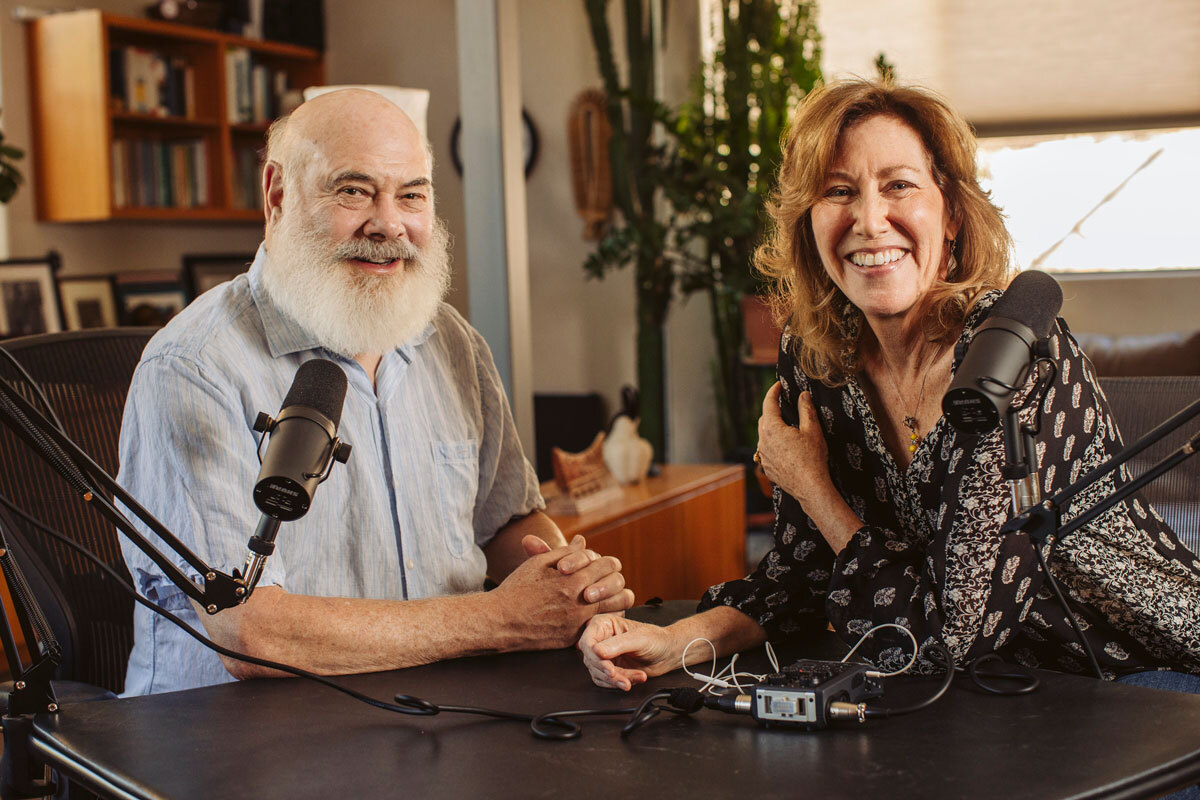
Andrew Weil, MD and Victoria Maizes, MD
Guest
@bodyofwonderpodcast
www.facebook.com/bodyofwonderpodcast
@bodyofwonder
Connect with the Podcast
Join the Newsletter
Be the first to know when there is a new episode.
Send the Show Your Questions
Submit a question for our hosts or suggest a topic for future episodes. We'll try to answer as many questions as we can on the show.